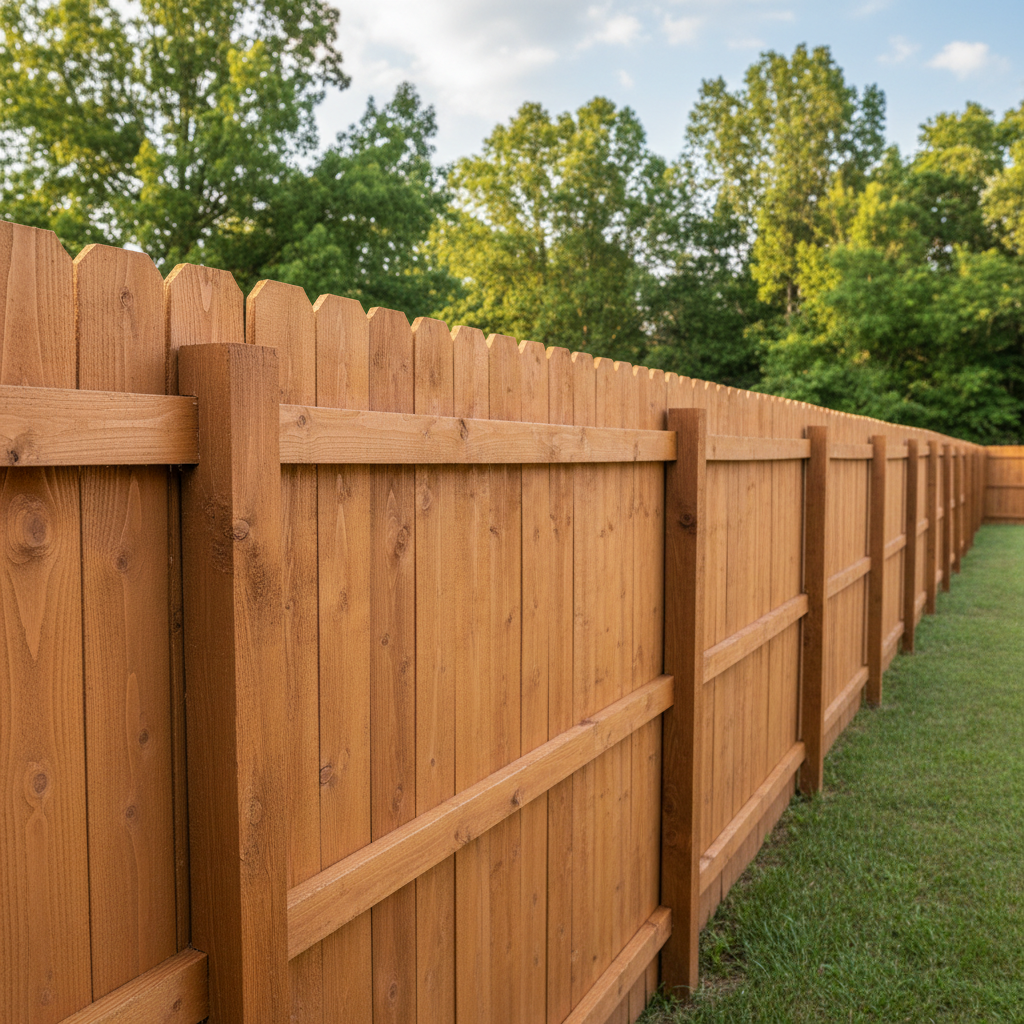
Stain or Paint? That's the First Question
Got a wood fence? Maybe it's looking a little tired, or you just want to spruce up the yard. The big decision right from the start is whether to stain it or paint it. Both have their good points and bad, and what works best for your fence often depends on what you're hoping to achieve and how much effort you're willing to put in.
Stain is fantastic if you love the natural look of wood. It soaks right into the wood fibers, protecting them from moisture and UV rays while still letting that beautiful grain show through. You can find transparent, semi-transparent, and solid stains. Transparent just makes the natural color pop; semi-transparent adds a little color, but you can still see the grain; and solid stain gives you a more opaque finish, almost like a thin paint, though it still penetrates. Stains tend to fade over time, especially with our Knoxville sun and humidity. Reapplying stain is usually easier than repainting, too.
Paint, on the other hand, gives you one solid, uniform color. It sits on top of the wood, forming a protective layer. This is perfect for hiding imperfections or if you need a really specific color to match your home. The downside? Paint can peel, chip, and crack, particularly on fences that expand and contract with our wild East Tennessee weather. When it goes bad, you're usually looking at scraping and sanding before you can put on another coat. That's a much bigger job than just cleaning and restaining, isn't it?
Before You Even Think About Opening a Can
Prepping your fence is probably the most important step, no matter if you're staining or painting. If you skip this part, you're just throwing away time and money. First things first, clean that fence. I mean really clean it – get rid of all the dirt, mildew, algae, and loose wood fibers. A good power washing usually does the trick, but be careful not to use too much pressure, especially on older wood, or you'll splinter it. You'll want a good fence cleaner or a mix of bleach and water for any mildew spots. Let it dry completely – and I mean completely – for at least 2-3 sunny days after washing. If you try to put anything on damp wood, it won't stick right, and you'll have headaches down the road.
Next, check for repairs. Replace any rotten boards, tighten loose nails or screws, and sand down any rough spots or splinters. You want a smooth, clean surface for your finish to grab onto. Don't forget to protect anything you don't want stained or painted, like plants, shrubs, or your neighbor's prize-winning petunias. Drop cloths and painter's tape are your absolute best friends here.
DIY or Call the Pros? Here's My Take
Now, this is where a lot of homeowners get stuck. Can you do this yourself? Absolutely. Is it a small job? Not usually. Staining or painting a fence takes a lot of time. If you've only got a small section of fence, say a gate or a short run, and you're comfortable with a brush or a small sprayer, go for it. It's a great way to save some cash and get that satisfying feeling from a job well done.
But if your fence is long, especially if it's tall or has a lot of intricate details, you might want to think twice. It's back-breaking work, and getting an even finish without drips or missed spots takes practice. Plus, using a sprayer effectively without overspray requires some skill and the right equipment. I've seen plenty of DIY jobs where folks ended up with splotchy fences or spent more on ruined plants and cleaning supplies than they would have on a pro.
Here at Family Fencing, we install a lot of fences, but we also get calls for finishing work. We've got the commercial-grade sprayers that make quick work of large fences, and our crews know how to get an even, professional finish. We also know the best products that hold up to our specific climate – that red clay soil we have around Knoxville can really kick up dust and dirt, so a durable finish is key.
During the Job: Tips for a Better Finish
If you're going the DIY route, pick a day with mild temperatures, low humidity, and no wind. You definitely don't want the finish drying too fast or blowing onto everything. Always do a test patch in a hidden spot to make sure you like the color and how it looks on your specific wood.
When you're applying it, work in sections and always go with the grain of the wood. If you're brushing, use long, even strokes. If you're spraying, keep the sprayer moving consistently to avoid drips and heavy spots. Two thin coats are almost always better than one thick coat. Make sure to let the first coat dry completely according to the manufacturer's instructions before putting on the second.
After the Finish: Maintenance Matters
Once your fence is stained or painted, you're not entirely off the hook. Regular maintenance will make your finish last longer and keep your fence looking good. Every year or two, give it a good cleaning with a soft brush and some mild soap and water. Check for any areas where the finish might be starting to wear down, especially on the top rails or spots that get a lot of sun exposure. These areas will need touch-ups or a fresh coat sooner than other parts.
For stains, you'll generally need to reapply every 2-5 years, depending on the product and how much sun and weather it gets. Painted fences might last longer, but when they do fail, it's usually a bigger project to fix. Keep an eye on it, and don't wait until it looks really bad to address it. A little proactive care goes a long way in protecting your investment.